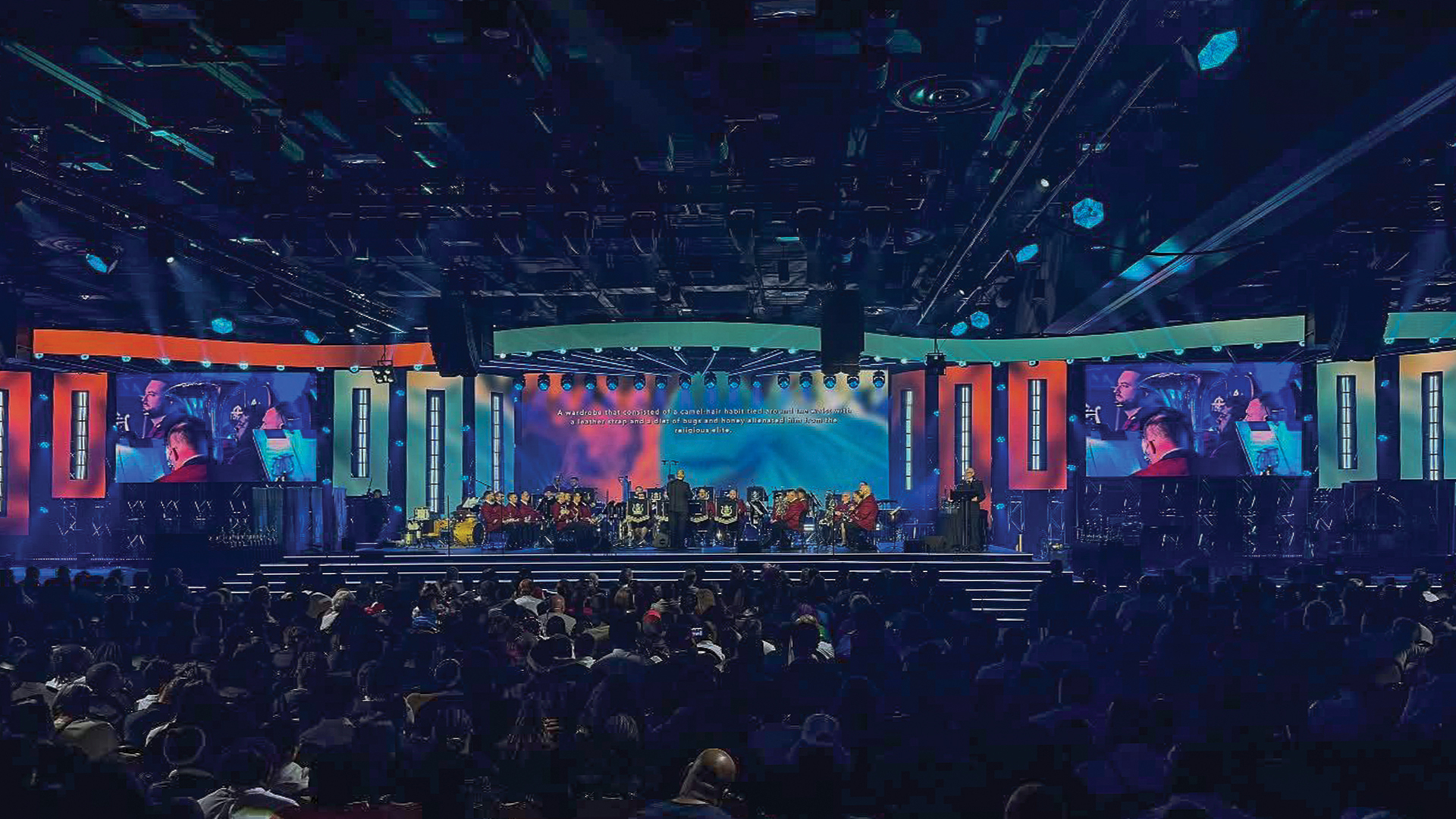
The LED video wall was supposed to display the conference’s carefully designed graphics sleek gradients, corporate logos, and occasionally the speaker’s PowerPoint. Instead, it had transformed into a massive, unforgiving mirror showing the audience exactly what they looked like at 8:30 AM after inadequate sleep and excessive coffee. The ROE Visual CB5 panels, normally a marvel of video engineering, had somehow locked into displaying the feed from the rear-facing PTZ camera at maximum zoom.
The Physics of LED Reflection Problems
LED wall mirror effects come in two distinct varieties: the technical kind (like our conference nightmare) and the optical kind. Technical mirror effects occur when video routing sends the wrong source to the wall. Optical mirror effects happen when the panel surface itself becomes reflective under certain lighting conditions.
Modern LED panels from manufacturers like ROE Visual, Absen, and Unilumin feature increasingly fine pixel pitches. The ROE Black Pearl BP2V2 achieves 2.8mm pitch, while Absen’s PL series reaches 1.2mm for broadcast applications. As pixels become smaller and denser, the protective surface coating must become smoother—and smooth surfaces reflect light.
The Birth of LED Video Technology
Large-format LED video displays evolved from the scoreboard technology that debuted in professional sports stadiums during the 1980s. The original Diamond Vision display at Dodger Stadium in 1980 represented a breakthrough—pixels composed of individual red, green, and blue LED elements that could create moving images visible in daylight.
Throughout the 1990s, LED video technology remained primarily outdoor, with pixel pitches measured in tens of millimeters. Indoor applications used projection because LED resolution couldn’t match the viewing distances of smaller venues. The transformation began around 2005 when manufacturers achieved sub-10mm pitches that made indoor LED walls practical for concert touring.
When Technology Reflects Reality
The most spectacular LED mirror incident in my experience occurred at a product launch in Las Vegas. The client had specified a curved LED wall using Roe Visual MC7 panels configured in a concave arrangement to wrap around the presentation area. The curve looked stunning during technical rehearsal with content playing.
Then someone turned on the room lights. The concave surface geometry, combined with the panels’ glossy coating, created a parabolic mirror effect that focused reflections toward the center of the audience. Attendees seated in the focal zone saw distorted, funhouse-mirror versions of themselves on the supposedly black screen. Moving their heads produced nauseating reflective distortions.
Our video engineer attempted various solutions: displaying deep black content, adjusting panel brightness, even trying matte spray on the surface (which the rental company understandably vetoed). Eventually, we solved the problem by repositioning every house light fixture to eliminate direct illumination paths to the curved wall—a twelve-hour overnight modification that transformed the room’s lighting design.
Broadcast Studio Challenges
Virtual production and LED volume stages have intensified mirror concerns. Studios using LED walls for real-time backgrounds—popularized by productions like ‘The Mandalorian’ using Stagecraft technology—must carefully manage reflections that can appear in camera shots.
The physics become complex: LED walls emit light that illuminates performers and sets, but their surfaces can also reflect external lighting sources. A key light positioned to illuminate talent might bounce off the LED surface and create unwanted hot spots in frame. Studios address this through meticulous lighting design, polarizing filters, and increasingly sophisticated LED panels with matte coatings.
Technical Solutions for Reflection Control
The AV industry has developed multiple approaches to managing LED wall reflections. Panel manufacturers now offer matte-finish options specifically for environments where reflection poses concerns. The Absen KL II series features an anti-reflection coating that reduces specular reflection by up to 90% compared to standard panels.
Hardware solutions include louver systems that attach to panel surfaces, similar to privacy screens used on monitors. These louvers reduce off-axis reflection while maintaining direct viewing quality. The trade-off involves slightly reduced brightness and potential moiré patterns at certain distances.
Software approaches work differently. By analyzing the room’s lighting geometry, media server systems like Disguise or Notch can generate content that compensates for expected reflections. If a portion of the wall will reflect a specific light source, the content in that region can be adjusted to counteract the reflection’s effect on apparent brightness and color.
The Signal Path Problem
Not all mirror effects are optical. Many result from video signal routing errors that send live camera feeds to screens intended for content playback. These technical mirror effects can be equally disorienting—and often more embarrassing because they reveal production infrastructure the audience shouldn’t see.
Complex productions typically route video through matrix switchers like the Barco E2 or Analog Way Aquilon. These systems manage dozens of input sources and output destinations through software-defined routing. A single incorrect crosspoint—often as simple as clicking the wrong preset—can redirect any source to any destination.
The conference disaster I mentioned opened this article resulted from exactly this type of error. A technician loading the next presentation’s routing preset accidentally executed the calibration preset used during setup—which included a test pattern that routed the rear camera to all outputs for focus verification. Forty-five hundred conference attendees spent eleven very uncomfortable seconds watching themselves before the error was corrected.
Prevention Through Production Design
Preventing LED wall mirror problems begins during production design. Venue surveys should assess lighting conditions, audience sight lines, and surface geometries that might create reflection paths. Some designers now use 3D modeling software like Vectorworks with lighting plugins to simulate reflection patterns before committing to panel layouts.
Panel selection should account for environment. Touring productions often specify panels with aggressive matte coatings because they’ll encounter unpredictable venue lighting. Permanent installations in controlled environments can use higher-brightness glossy panels with precise lighting design to prevent reflections.
Curved LED configurations demand particular attention. Convex curves disperse reflections widely, usually minimizing problems. Concave curves concentrate reflections, potentially creating intense focal points. Compound curves—surfaces that curve in multiple directions—can create unpredictable reflection patterns that only reveal themselves under actual show lighting.
Real-Time Monitoring and Response
During events, video engineers should monitor LED walls for reflection issues that might not have appeared during rehearsal. Changed lighting conditions—whether from external windows, modified house lighting, or even audience members using phone flashlights—can introduce new reflection problems.
Response protocols should include rapid content adjustment capabilities. Having media servers loaded with backup content in different brightness ranges allows quick substitution if specific content creates problematic reflections. Darker content reduces reflections; some productions maintain ’emergency dark’ content that can replace any planned visual during reflection emergencies.
Physical interventions remain options of last resort. Emergency diffusion material can reduce wall brightness at the cost of image quality. Strategic masking can block specific reflection paths. In extreme cases, repositioning house lighting—if the venue permits—may be the only solution.
The LED walls that turn into mirrors remind us that video technology operates within physical spaces, subject to the laws of optics that no amount of software can circumvent. Every surface reflects. Every light source casts. The best video production anticipates these interactions and designs around them—because when an LED wall becomes a mirror, everyone sees exactly how unprepared you were for the reflection.
