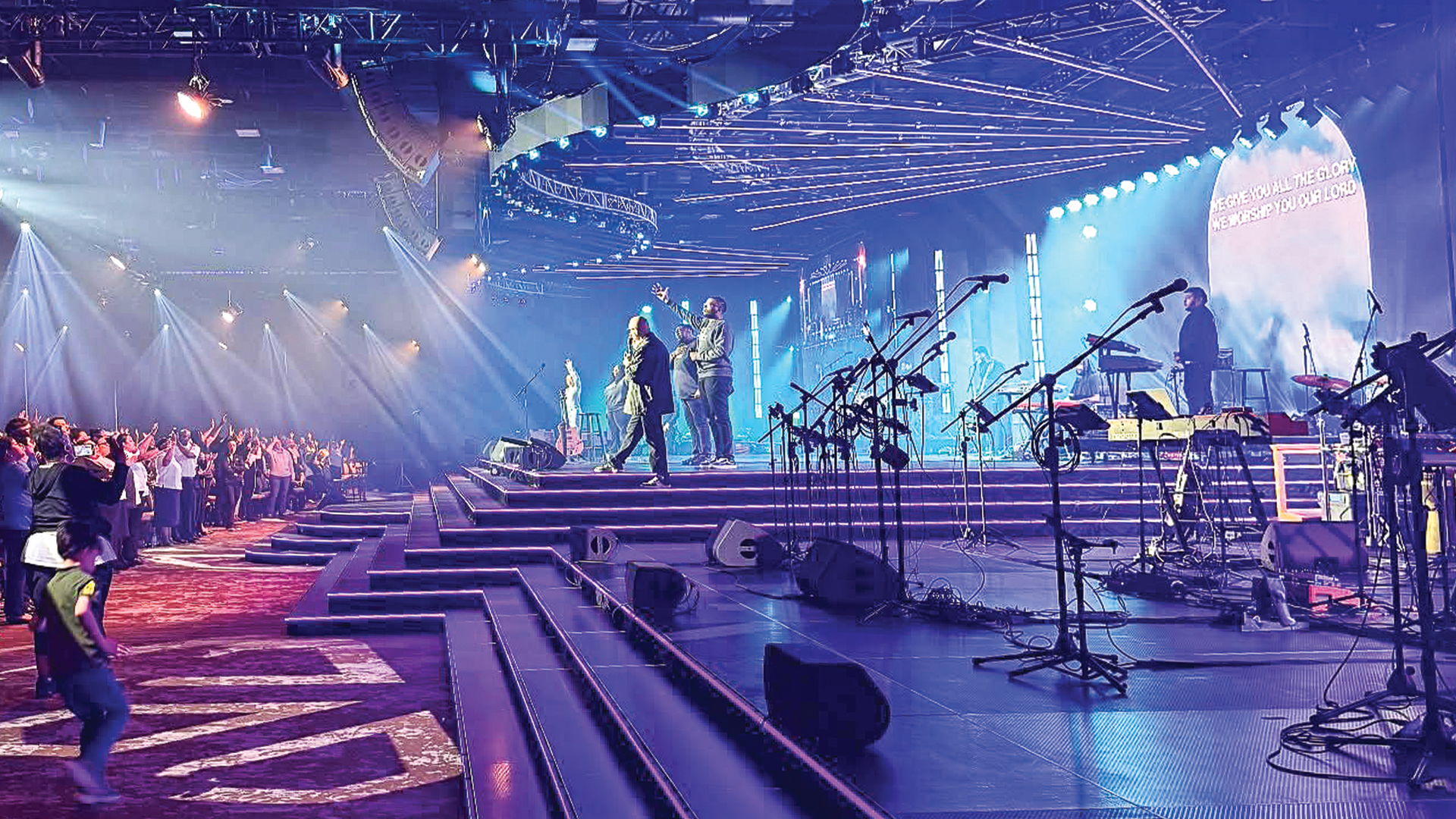
The promise of the hybrid event — a live audience in the room and an unlimited remote audience connected through a live stream — has become one of the defining commercial realities of the post-2020 events industry. Organizations that once thought of live streaming as a secondary distribution channel now treat the remote audience as a primary constituency, sometimes outnumbering the in-room audience by a factor of ten or more. Against this backdrop of elevated expectations, the persistent, mundane, infuriating reality of venue internet infrastructure stands as one of the most consequential production challenges in the industry. Venues that were designed for occupancy, not bandwidth, struggle to provide the reliable, high-throughput connectivity that professional live streaming demands — and the gap between what production teams need and what venues can actually deliver is where streaming disasters are born.
The Bandwidth Reality of Professional Live Streaming
A professional corporate event live stream operating at 1080p/60fps with broadcast-quality encoding requires a sustained upload bitrate of 8–15 Mbps for the primary stream, plus additional overhead for redundant stream paths, contribution feeds to a cloud transcoding platform, and potentially a simultaneous social media stream to platforms like YouTube Live, LinkedIn Live, or Vimeo. Factor in the production team’s own network requirements — media server management, wireless system monitoring, lighting console connectivity — and the total bandwidth demand from production alone can reach 50–100 Mbps of reliable upload capacity.
Most hotel and convention center house internet services are provisioned for web browsing and email, not production contribution. Shared building networks, oversubscribed bandwidth agreements, and infrastructure that hasn’t been meaningfully upgraded since the mid-2000s are the norm rather than the exception in the hospitality sector. The solution requires both technological mitigation and pre-production diligence that many production teams still treat as an afterthought.
Bonded Cellular: The Production Industry’s Safety Net
The technology that has most transformed the live streaming reliability equation for location-based production is bonded cellular transmission. Platforms including Haivision SRT Gateway, LiveU LU800, Teradek Cube, and Peplink Balance routers aggregate bandwidth from multiple cellular carriers simultaneously — combining 4G LTE and 5G connections from different network operators into a single, high-throughput, resilient data pipe. A bonded cellular unit carrying six SIM cards across three carriers can achieve sustained upload throughput of 40–80 Mbps in good RF conditions, entirely independent of the venue’s internet infrastructure.
The critical operational principle is carrier diversity — using SIM cards from multiple cellular operators ensures that any single carrier’s congestion or coverage gap doesn’t collapse the entire bonded connection. In dense urban venues where 5,000 event attendees are simultaneously competing for cellular bandwidth, even this protection has limits — which is why bonded cellular should supplement, not replace, a dedicated wired internet circuit whenever one is achievable.
Dedicated Internet Access: The Gold Standard
For production-critical live streaming, the only reliable foundation is dedicated internet access (DIA) — a circuit provisioned specifically for production use, not shared with building occupants or other event attendees. This means engaging the venue’s exclusive internet provider (many major venues have exclusive contracts with telecommunications vendors) in advance of the event to provision a dedicated fiber circuit with guaranteed upload throughput. The advance notice required varies — some venues can provision a DIA circuit in 72 hours; others require 30 days or more. Discovering this requirement on load-in day is a production management failure that no amount of bonded cellular will fully compensate for.
When engaging venue internet vendors, specify the requirement in Mbps of guaranteed symmetric bandwidth — not “best effort” or “shared” service. Request a Service Level Agreement (SLA) that specifies minimum throughput, latency ceiling (typically under 50ms for live streaming), and escalation contacts for day-of-show technical issues. Get these commitments in writing before the event date.
Encoding and Streaming Protocols: Building Resilience Into the Software Stack
Even with a good internet connection, the encoding and streaming protocol stack must be configured for network resilience. SRT (Secure Reliable Transport), an open-source protocol developed by Haivision and now an industry standard, provides error recovery, packet retransmission, and automatic bitrate adjustment that enables high-quality streaming over variable network conditions. Compare this to RTMP (Real-Time Messaging Protocol), the legacy streaming protocol, which has no native error recovery and is highly sensitive to packet loss. Migrating your live streaming encoder workflow — whether Wirecast, vMix, or OBS Studio — to SRT output is one of the highest-impact steps any production team can take to improve streaming reliability in challenging network environments.
The Network Advance: Diligence That Prevents Disasters
No amount of technology compensates for poor pre-production diligence on venue internet infrastructure. Develop a streaming network advance checklist that is executed for every live streaming event: verify dedicated circuit provisioning, confirm upload throughput with a speed test using the production team’s actual encoder hardware, identify the venue network’s firewall and port configuration (many venue networks block streaming ports by default), establish the escalation contact for day-of technical issues, and test the bonded cellular backup independently. The production team that arrives at load-in having answered every one of these questions in advance is the team that delivers a flawless stream — and gets invited back.
