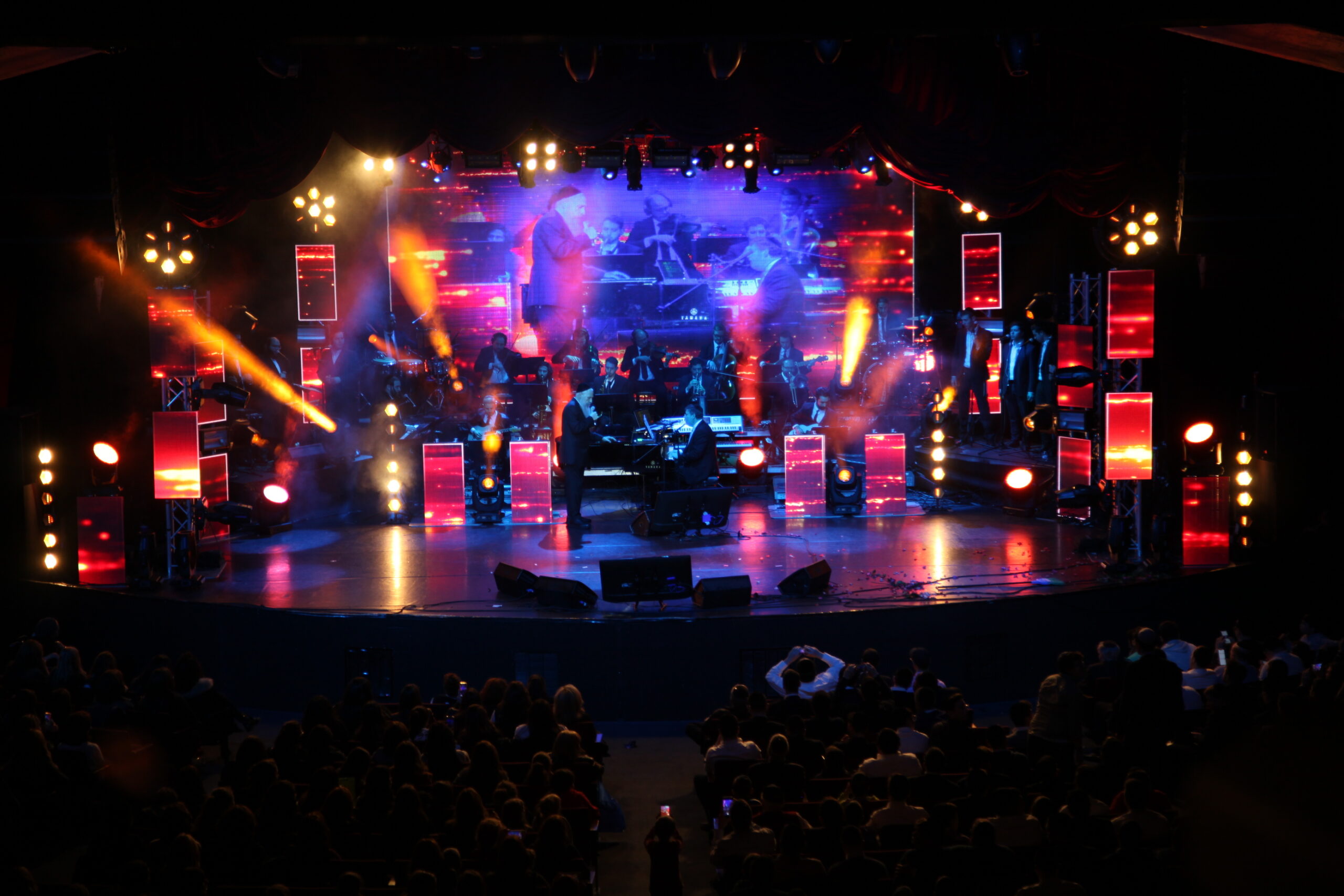
The moment a production signs onto a union venue or falls under a collective bargaining agreement, the entire operational structure of the show changes. Labour rules, jurisdictional boundaries, overtime triggers, and rest period requirements reshape every call sheet, every advance conversation, and every equipment decision. For AV professionals who primarily work in the non-union touring or corporate world, a first encounter with IATSE, IBEW, or Teamsters jurisdiction can feel like landing in a foreign country — one with detailed bylaws and significant financial penalties for violations.
The History and Purpose of Entertainment Unions
The International Alliance of Theatrical Stage Employees (IATSE) was founded in 1893 in response to the dangerous and exploitative conditions of 19th-century theatrical labor. Workers routinely operated 16-hour days with no meal breaks, no overtime compensation, and no safety standards. By the mid-20th century, IATSE had organized virtually every major theatre, arena, and convention center in North America, establishing the framework of jurisdictional work rules that production companies navigate today. The International Brotherhood of Electrical Workers (IBEW), responsible for electrical and power work at many union venues, traces similar roots to the same era.
Jurisdictional Boundaries and Work Rules
Understanding jurisdiction is the first challenge. At a fully IATSE-organized venue, work may be divided between multiple locals, each covering a specific craft. IATSE Local 695 or its equivalent covers sound and video installation. The IBEW local controls all electrical connections, meaning a touring production electrician may not be permitted to plug in a single Ceeform connector without a union electrician present. Every task has an owner, and doing work outside your jurisdiction — even a simple cable connection — can trigger a grievance, a work stoppage, or significant contractual penalties.
Overtime, Meal Penalties, and the Call Sheet Architecture
The financial architecture of union production is built around straight-time hours, overtime multipliers, and penalty clauses. A standard IATSE call structure typically allows 8 straight-time hours before overtime kicks in at 1.5x, with double-time applying beyond 10 or 12 hours depending on the local agreement. Meal penalty clauses require that workers receive a meal break of at minimum 30 minutes within every 5 or 6 hours of work — failure to provide a meal break triggers per-worker penalty payments that accumulate rapidly across a crew of 40. Production managers working union calls build their call sheets around these triggers deliberately, often choosing to start an hour earlier rather than trigger a costly penalty.
Touring Crews and the House Crew Relationship
The relationship between a touring production’s advance crew and the house crew at a union venue is one of the more delicate dynamics in professional live production. Advance crew members may not be permitted to operate equipment they have loaded into the building until house crew members are present. On IATSE A-list venues, touring riggers may be required to work alongside house riggers who have venue-specific structural knowledge and existing relationships with the venue rigging supervisor. The smartest touring production managers invest time in the advance relationship — communicating rider requirements early, and entering load-in day as a collaborative rather than adversarial operation.
Equipment and Subcontracting Constraints
Union agreements often govern not just labor but equipment sourcing. Some venues require that all equipment rental come from union-affiliated vendors or that the production use in-house equipment for certain systems before sourcing outside. This can create challenges when a touring audio engineer has spec’d a DiGiCo SD12 console and the house system features a Yamaha CL5 that the local crew knows exclusively. The negotiation between a touring production’s technical rider and the venue’s preferred operating environment is a standing point of friction, mediated by the production manager’s ability to read what is contractually required versus what is simply preferred house practice.
Corporate AV and the Union Convention Center
The corporate AV industry encounters union jurisdiction most frequently at convention centers — facilities like McCormick Place in Chicago, Javits Center in New York, and Las Vegas Convention Center, all operating under comprehensive collective bargaining agreements. A corporate AV company installing a 200-person general session in these facilities must comply with rules governing who can hang a projection screen, who can route signal cables, and who can position confidence monitors. Experienced corporate AV production managers build union labor costs into their proposals from the outset, calculating that union calls will add 40–80% to the labor line compared to a non-union installation of identical scope.
Safety Benefits That Make the Rules Worth It
The frustrations of navigating union jurisdictions are real, documented, and shared by virtually every production manager who has worked extensively in organized venues. But the reasons those rules exist are equally real. The union apprenticeship programs that feed IATSE locals produce some of the most technically competent stagehands in the industry — trained specifically in chain motor operation, rigging point load calculations, and electrical safety standards for entertainment. The ETCP certification administered by the Entertainment Services and Technology Association has become a professional standard that union venues require for riggers and electricians.
Working With Unions: The Professional Approach
The production professionals who navigate union venues most effectively are the ones who approach the relationship as a partnership rather than an obstacle course. Reading the collective bargaining agreement in full before the first advance call. Engaging the business agent directly to clarify ambiguous jurisdictional situations before they become disputes. Building the call schedule with enough buffer that meal breaks happen on time without pressure. The union agreement defines the parameters; how a production operates within those parameters determines the quality of the experience for everyone on the show.
Produced for AV Industry Insight | © 2025 All Rights Reserved
