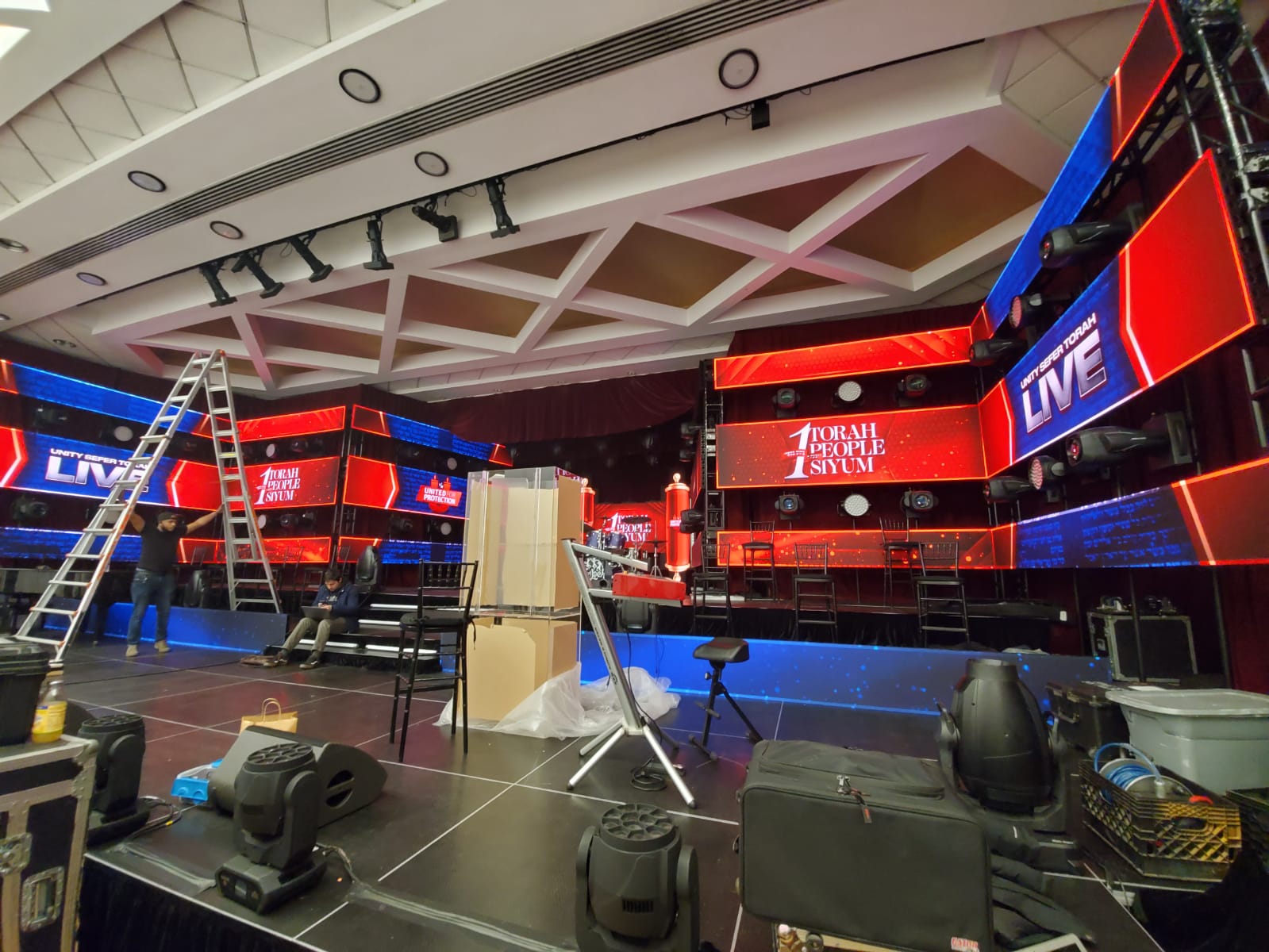
Adventures in Site Survey Fiction and the Creative Interpretation of ‘Venue Ready’
When the Advance Photos Told Beautiful Lies
The site survey photographs showed a pristine convention center with polished concrete floors stretching beneath soaring ceilings. What the production advance team discovered upon arrival was something considerably more interpretive: a construction zone where ‘floors’ existed primarily as a concept. The IATSE stagehand crew surveyed the situation and uttered words that echo through production history: ‘We’re going to need more plywood.’
The phenomenon of optimistic venue representations plagues the live event industry with remarkable consistency. Client-provided photos were taken during the venue’s opening gala three years ago; current conditions involve ongoing renovations affecting approximately 40% of the floor space designated for your LED video wall and entire catering setup.
The Art of Improvised Load Distribution
Missing floors present immediate structural engineering challenges that production teams must solve without actual structural engineers present. When your CM Lodestar chain hoists need ground support bases and the ground consists of exposed rebar and plywood spanning gaps, creative solutions become necessary. The Staging Concepts deck systems designed for outdoor festivals suddenly find indoor applications.
One legendary 2019 corporate event required the production company to construct an entirely separate floor system floating six inches above what the venue termed ‘subfloor preparation.’ The Wenger Showdeck panels supporting the AV infrastructure sat on adjustable telescoping legs while underneath, construction workers continued laying actual flooring simultaneously.
Historical Venue Misrepresentations Worth Remembering
The tradition of venue condition surprises extends back to the earliest touring days. When Bill Graham organized the legendary 1960s Fillmore concerts, advance arrangements meant a phone call and frequent discoveries that ‘the venue’ consisted primarily of optimism. The modern production rider exists partly because too many crews arrived expecting ballrooms and found parking garages.
The 1985 Live Aid production teams at JFK Stadium faced a venue whose infrastructure hadn’t hosted major events in years. Power distribution rated for normal operations proved wildly inadequate. The emergency generator deployment that saved the broadcast became a case study in production adaptation—and a lesson that venue assurances should be verified with actual electrical meters.
The Power Distribution Nightmare
Floors aren’t the only infrastructure element venues misrepresent. The electrical service specified as ‘400 amp three-phase’ might arrive as two separate 200 amp single-phase panels on opposite sides of the building. Your Motion Labs power distribution can handle creative configurations, but not when the feeder cables need to span 300 feet across active construction zones.
The generator backup that should exist only for emergencies becomes primary power for floor-challenged venues. Caterpillar rental generators positioned in loading docks provide the clean power your Christie projectors require while venue contractors promise the permanent electrical will be ‘ready any minute now.’ Those minutes often stretch into hours that consume your entire load-in schedule.
Practical Survival Strategies for Impossible Venues
The first commandment of venue survival: never trust photos more than six months old. Request dated photographs specifically showing the areas where your production will operate. Better yet, insist on video walk-throughs conducted by someone who understands that ‘minor construction’ to a venue manager means something very different to a production manager expecting to stack Meyer Sound LYON arrays in that exact location.
Build contingency infrastructure into every production plan. Your truck manifest should include portable staging decks beyond what the show design requires. The All Access Staging platforms collecting dust in your warehouse exist for exactly these moments—when the venue floor disappears and your entire FOH position needs instant relocation to somewhere with actual structural support.
The Cable Management Chaos
Floor-challenged venues transform cable management from routine task to extreme sport. Your multicore audio snakes designed for flat surfaces must now navigate construction debris, temporary ramps, and gaps that would swallow small children. The cable bridges and Checkers Industrial crossovers protecting your runs multiply exponentially when every path crosses active work zones.
Wireless systems offer partial escape from cable nightmare venues. Your Shure Axient Digital wireless microphones and Sennheiser IEM systems reduce the number of cables crossing dangerous terrain. The RF coordination becomes more complex, but complexity beats cables dangling across open trenches where construction equipment operates.
Communicating With Construction Crews
The parallel universe of simultaneous construction and production requires communication protocols that neither industry traditionally practices. Construction crews operate on their schedules, their safety requirements, and their priorities—none of which involve your soundcheck timing. Establish direct communication with the construction foreman and negotiate quiet periods, access windows, and mutual no-go zones.
The Clear-Com intercom systems connecting your crew should include a channel dedicated to construction coordination. When the concrete saw starts operating during your client walk-through, someone needs immediate contact with whoever can pause it. The thirty seconds of warning before jackhammering begins might save your entire video confidence monitor from vibration damage.
Safety Protocols for Active Construction Zones
When OSHA requirements for construction sites collide with live event production, the production team usually loses. Hard hats, safety vests, and steel-toed boots become mandatory wardrobe for your entire crew—including the lighting designer who’s accustomed to working in sneakers. The personal protective equipment budget explodes, but compliance beats the alternative of being ejected from your own load-in.
Document everything with timestamped photographs showing venue conditions at arrival. When the client questions why setup took twelve hours instead of eight, visual evidence of the ‘ready venue’ they provided proves invaluable. The production notes should include detailed accounts of obstacles encountered and solutions implemented—both for billing justification and for ensuring no one books this venue again without appropriate warnings.
The Show Must Go On (Somehow)
Despite impossible conditions, professional production crews deliver shows that audiences never suspect emerged from construction chaos. The ROE Visual LED panels displaying corporate messaging look identical whether supported by permanent flooring or by temporary deck systems assembled hours before doors opened. The d&b audiotechnik line arrays deliver pristine audio regardless of the acoustic challenges created by missing walls and plastic sheeting.
The crews that survive floor-free venues develop reputations that transcend normal production capabilities. They become the teams clients call when impossible deadlines meet impossible conditions—not because they enjoy suffering, but because they’ve proven they can transform ‘venue ready’ from a venue manager’s hopeful fiction into actual, functional event production reality. Every plywood sheet laid over exposed concrete represents a victory of professional determination over circumstantial absurdity.
